
Rising waters | Rooted solutions
Six months on: practical natural flood management across North Yorkshire
Our delivery team has spent the past six months refining practical measures that work on real farms. Recent work has also deepened our understanding of how NFM performs across varied conditions.
This update continues the story from our spring delivery update. It sets out what has been built, what is underway and what we are learning from practical natural flood management (NFM) on farms across Ousewem’s focus catchments.
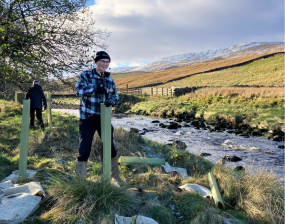
Over the past six months our delivery team, led by the Yorkshire Dales Rivers Trust, have kept a steady focus on practical, workable measures: scrapes, hedgerow improvements, tree planting in suitable places and leaky features made from local materials. Interventions have been designed to sit lightly within normal farm operations and avoid disruption to grazing and machinery movements. The work has also given us clearer evidence about how NFM behaves in different conditions across North Yorkshire.
What we have been learning on farms
Work across upland and lowland farms continues to show that every site is unique. Soil type, slope, drainage history, and grazing patterns all influence what is realistic. A few themes stand out:
- Simple interventions tend to fit best. Scrapes in awkward corners, small wetland pockets and hedgerow improvements have been effective and easy for farmers to adopt. These changes have helped reduce runoff and improve soil structure in wet periods and improve water retention in dry periods. Their performance depends on placement rather than size, which reinforces the need for careful design on each farm.
- Hedgerows are important for soil and water. Our discussions at Groundswell and conversations with local farmers have underlined how hedge shape and density influence both soil health and flood resilience. Many hedges have been trimmed into narrow, leggy shapes that capture less run off and offer less of a windbreak, meaning they have fewer benefits for preventing surface run off or soil erosion. They also offer scant shelter for livestock and have less wildlife benefit than a thick, bushy hedge. We are now working more closely with farmers on hedge conditions, timing of management and opportunities to thicken or replant where needed.
- Local checks help avoid problems later. Some sites have required more detailed assessment. Old mining activity in Arkengarthdale means that the team must design carefully to avoid lead contamination risks, whilst the presence of SSSIs meant small adjustments to plans. These checks are helping reduce long-term risks and avoid measures that might conflict with ecological requirements.
- New materials are worth testing. We have started trialling wool logs behind leaky features at one site to understand how Wensleydale wool behaves when wet and how it interacts with sediment. This is a small trial and will run through winter. We will report our findings at the end of the trial.
Ongoing communication with landowners
Farmers and estates continue to emphasise practicality when designing the interventions. They want NFM that fits with existing farming operations and does not increase management. Common points raised during farm walkovers include:
- Keeping gateways and access clear
- Placing scrapes in low value corners
- Reducing the need for follow up maintenance
- Avoiding changes that affect livestock movements
- Designing around wet areas that already disrupt work
These conversations have helped shape the next phase of our design work to ensure the interventions fit within existing land use and terrain.
What this means for wider NFM
The work from the past six months is helping to refine how we apply NFM across North Yorkshire’s Swale, Ure, Nidd and Ouse (SUNO) catchments and beyond. We continue to gain a wealth of knowledge from the famers and landowners we work with, and this learning will be used in the final phase of the project to inform our strategy for delivery beyond the end of this project.
This practical evidence also supports conversations about future investment, including how NFM measures could link with emerging green finance discussions.
How we are working across farms and estates
Strong relationships continue to be central to our delivery. Over the summer and autumn, we have worked closely with estates including Swinton and Aldburgh, and with other landowners and tenants near Masham, Hawes and Reeth. We’re also building relationships with Nidderdale National Landscape and other groups such as the Swaledale and Wensleydale Environment Farmers Group, and the Dales Farmer Network, ensuring our work aligns with that of others in the catchment.
Walkover surveys remain our starting point for every site. These visits help us understand how water moves across the land, the farming operation and system, both current and historical, and where issues such as poaching or erosion occur. The team then designs each project to fit that specific context.
Next steps
As ground conditions allow, we will complete the remaining autumn work and progress ten early-stage sites now in design. Several new expressions of interest are under review. We aim to keep the programme flexible so farmers can decide what works best within their own systems.
Also see
