Rising waters | Rooted solutions
From floods to decisions: why modelling matters for York and North Yorkshire
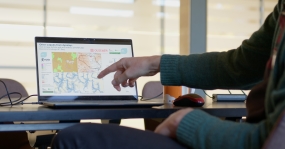
How can modelling reduce flood risk in York? Explore Ousewem’s work across the SUNO catchment and how data is guiding natural flood management decisions.
Modelling is at the heart of how Ousewem is building the evidence base for natural flood management (NFM) across the Swale, Ure, Nidd and Upper Ouse (SUNO) catchment. This blog explains what our modelling work shows – and why it matters for the decisions ahead.
What does modelling tell us?
Modelling does not predict the future. It gives decision-makers their best evidence-based assessment of where water will go, how deep it may get, and what interventions could reduce that risk. As we explored in our earlier blogs on hydrological and hydraulic modelling and NFM tools: modelling, theory and practice, modelling works at multiple scales – from the whole catchment down to a single field or community.
As we set out in evolving modelling in Ousewem, modelling is the catalyst – model outputs are the first step in identifying future NFM priority locations across the catchment. Stakeholder knowledge, land ownership, and local conditions then corroborate and refine those findings, with stakeholder input shaping final prioritisation decisions. Modelling leads – it does not dictate.
A whole-catchment picture: what does a catchment-wide scenario deliver?
One of the most significant steps in Ousewem’s modelling work is the development of a whole-system model for the SUNO catchment. This models a scenario in which NFM is delivered at full scale across the entire catchment – a catchment-wide ambition that has not been modelled before in this way.
The model focuses on peak flow reduction. What it shows is important: modelling allows us to measure the contribution of specific NFM interventions and to understand where and at what scale they deliver most. Tree planting, for example, contributes to quantifiable reductions in peak flow but achieving that at catchment scale requires a significant level of woodland creation that may not be possible under current land use requirements. To provide flood risk benefit, NFM demands a co-ordinated, multi-organisational approach across the SUNO catchment.
The model provides clarity on the scale of delivery NFM required and clarity is what good decisions need. Project manager, Victoria Murray, commented:
Smaller catchments: where does targeted action deliver most?
Ousewem’s modelling works across multiple scales, from the whole SUNO catchment to individual communities – with each scale informing a different stage of planning and delivery.
At a smaller, community scale, our modelling takes a more detailed look at how NFM features work together in the areas closest to communities at risk. The model allows us to examine individual interventions - from leaky dams to ponds and wetlands - and understand their specific contribution. By entering detailed information such as pond depths or the characteristics of a particular feature, we can build the most precise picture yet of how targeted NFM delivery upstream can reduce flood risk locally. This provides landowners, farmers and community partners with clearer insight into how interventions are expected to perform and where they can have the greatest impact.
Beyond peak flow: the co-benefits case
NFM interventions such as wetland creation, peatland restoration and improved soil management deliver measurable gains for water quality, carbon storage, biodiversity and community health and wellbeing. Our NFM water quality model identifies sources and travel pathways of water pollution in the catchment, helping us to identify the most suitable locations to deliver NFM which provide flood risk and water quality benefits. Our water quality modelling blog sets out how nature-based solutions can reduce pollution reaching our rivers. Additionally, work by the University of York is developing the willingness to pay evidence that will translate these benefits into investment decisions.
Why this matters for York and North Yorkshire
York has flooded before and will face flood risk again. The decisions that will shape the city’s resilience over the coming decades are being made now by local authorities, the Environment Agency, Yorkshire Water, and national policymakers working through frameworks such as the Independent Water Commission.
Modelling gives those decision-makers something to work with. It sets realistic expectations about what NFM can and cannot achieve at scale. It helps target investment. And it builds the evidence base that makes the case for sustained funding and long-term catchment management.
Ousewem is a programme built on partnership. Our modelling work reflects that through combining the technical expertise of JBA Consulting with the knowledge of farmers, landowners, communities and statutory partners across the SUNO catchment.
What comes next
This is a positive step forward. The whole-system model is not the final word, it is part of a continuing journey of evidence-building that will inform NFM delivery, investment decisions, and the long-term legacy of Ousewem beyond the life of the programme.
We will share more as our modelling work develops. In the meantime, if you want to understand how modelling can support flood risk decisions in your area, get in touch.
Also see
