
Rising waters | Rooted solutions
How do we measure success? Shaping the future of NFM monitoring
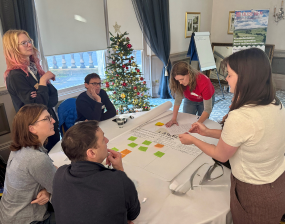
Monitoring produces evidence of what NFM delivers. Earlier blogs explored how choosing the right indicators helps to capture evidence for NFM benefits. Our recent workshop built on that work.
Monitoring produces evidence of what natural flood management (NFM) delivers.Earlier blogs explored how choosing the right indicators helps to capture evidence for NFM benefits – from flood reduction to wider gains for people and nature. Our recent workshop built on that work. It focused on creating a practical shortlist that can show what NFM delivers and support modelling, policy and future investment.
Towards standardised indicators
Across the UK, valuable evidence is gathered about the impacts of NFM initiatives. However, without a standardised framework for monitoring it is difficult to show the extent and consistency of the benefits. This makes it harder to build confidence among decision-makers or make the case for long-term investment and/or funding.
What we did at the workshop
At the end of November 2025, Ousewem brought together practitioners, researchers, policymakers, and funders to co-design a shortlist of practical, credible indicators of the benefits of NFM. The aim was to strengthen how we measure NFM’s impact and to support a national framework for monitoring that can be applied across projects and funding models.
The workshop built on research by our partners at the University of York. Their review identified more than 250 indicators currently used to assess NFM benefits. All indicators were evaluated against criteria for their credibility, meaningfulness, feasibility and communicability. Participants worked with a selection of these and scored their confidence in how well they performed against these criteria. Scores were then totalled, and the top ranked 18 indicators were presented. Finally, participants were asked to identify a compatible and comprehensive set of 10 indicators that could form the basis of standardised monitoring guidance. These covered direct flood risk reduction benefits, and also co-benefits relating to soil health, biodiversity, carbon sequestration and water quality.
What we learned
The discussions highlighted that effective indicators need to be:
- credible, backed by evidence and measurable change
- practical, so land managers and delivery partners can collect data efficiently
- relevant, linking directly to the policy and funding questions that drive action
Participants were also clear that monitoring must stay proportionate to the project and flexible enough to reflect different aims, landscapes and resources. The value lies in the shared principles rather than rigid rules.
Linking monitoring and investment
Funding models vary, from public grants to blended finance, and each asks for different types of evidence. Investors and funders increasingly look for reliable, comparable data on outcomes such as flood reduction, water retention, carbon storage and habitat creation.
A small, well-defined library of indicators could help by:
- showing real-world outcomes in a way that is easy to communicate, and helping to report co benefits consistently across projects
- strengthening business cases for long-term funding
- supporting scalable finance models that bring together public and private investment
Several participants noted that a clear, proportionate set of indicators could help the sector describe its collective impact. This aligns with Ousewem’s wider work on modelling and investment, ensuring that evidence gathered on the ground links directly to the questions that shape funding decisions.
What next
The workshop created a strong foundation for a shared set of indicators, but the work is still developing. Over the coming months we will continue reviewing the shortlist with partners, exploring how it might be tested in different contexts and where refinement is needed.
The collaborative spirit in the room was a real strength, and we’re grateful to everyone who contributed their time and expertise. Our ambition is to create national guidance on the standardised monitoring of NFM benefits. We are now consulting experts in this area to ensure we present our findings in a way that meets stakeholders needs and will inform policy and practice.
Get involved
If you're interested in using the emerging indicators or would like to stay updated on future opportunities, contact Dr Catherine Cowie by email: [email protected].
Also see
